The Original Diet: What Did God Really Intend for Us to Eat?
Rethinking Meat & Protein — Part 3
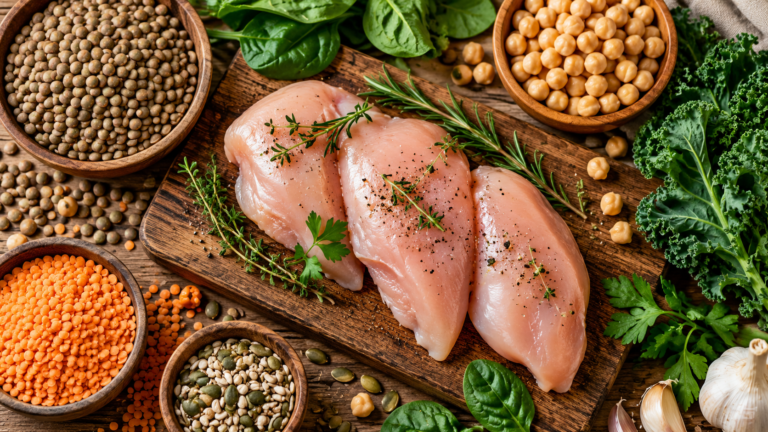
So, we’ve talked about what’s really in our chicken. We’ve discussed plant-based proteins and the nine essential amino acids our bodies need to function properly.
But now I want to take this conversation somewhere a little different.
Let’s go all the way back to the beginning.
Before grocery stores, fast-food restaurants, processed foods, and even the way we raise animals today, what were humans originally given to eat?
Well, if we open our Bibles to Genesis, we might find something interesting.
In the Beginning, There Were Plants
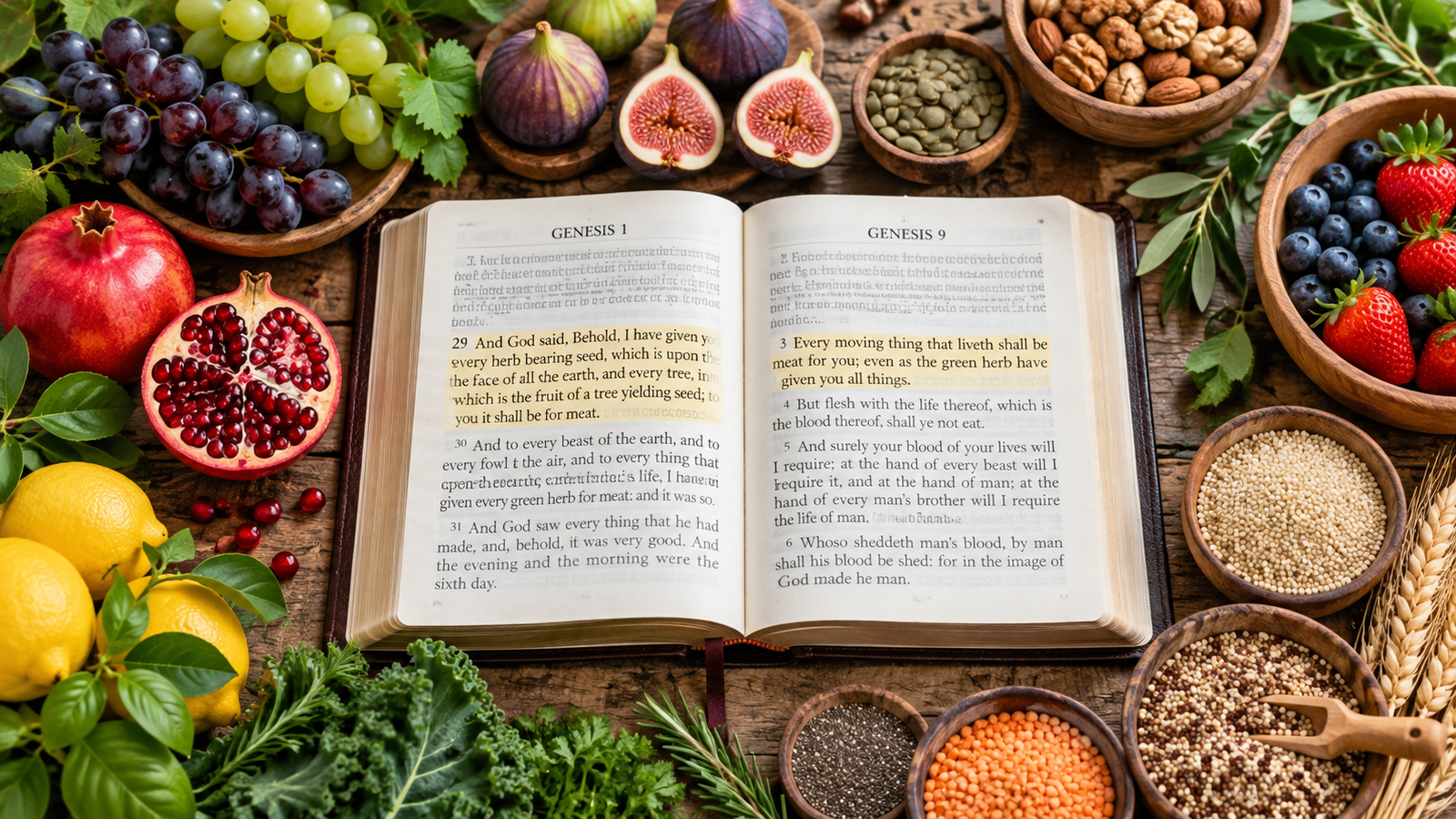
Genesis 1:29 (KJV) says:
“And God said, Behold, I have given you every herb bearing seed, which is upon the face of all the earth, and every tree, in the which is the fruit of a tree yielding seed; to you it shall be for meat.”
Now, hold on a minute!
Did you catch that?
God was talking about plants, seeds, and fruit!
And before anybody gets confused about the word meat, in this passage it refers to food, not necessarily animal flesh.
According to the Genesis creation account, the original food provision for humanity was plant-based.
No chicken. No beef. No pork.
Just the foods that came from the earth.
Interesting, isn’t it?
So When Did Humans Start Eating Animals?
Here’s where the conversation gets even more interesting.
After the flood, Genesis 9:3 (KJV) says:
“Every moving thing that liveth shall be meat for you; even as the green herb have I given you all things.”
Now we see something different.
God gives Noah permission to eat animals.
But here’s my question.
Just because something is permitted, does that necessarily mean it has to be the foundation of our diet?
I’m not telling anybody that eating meat is a sin. The Bible doesn’t say that.
But I do think it’s worth considering why the original creation account emphasized foods that grew naturally from the earth.
What Does Nutrition Tell Us Today?
Now, let’s bring a little nutrition into this conversation.
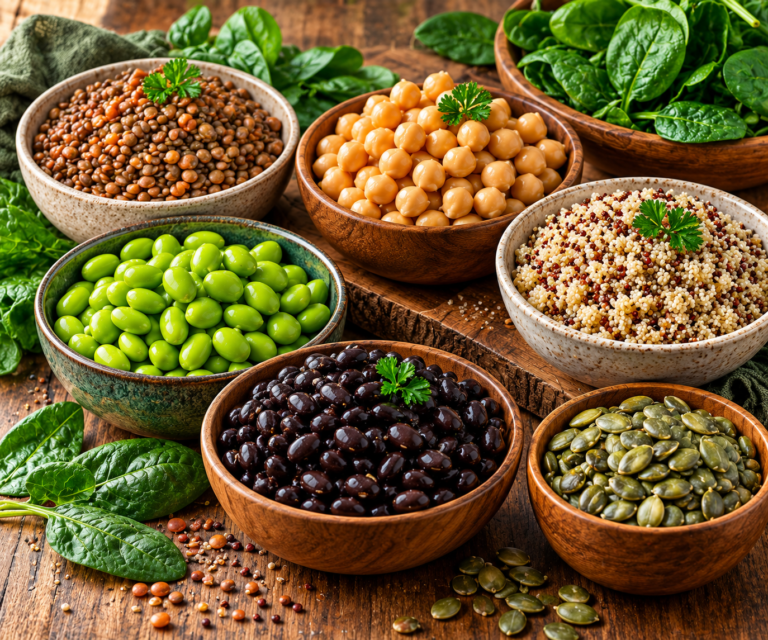
Fruits, vegetables, legumes, whole grains, nuts, and seeds provide nutrients our bodies need, including fiber, vitamins, minerals, and beneficial plant compounds.
And as we discussed in Part 2, protein doesn’t have to come exclusively from animals.
Foods like lentils, beans, quinoa, soybeans, pumpkin seeds, and other plant foods can help us meet our daily protein requirements.
Of course, a healthy plant-based diet still requires balance and planning. Nutrients such as vitamin B12 deserve particular attention when eliminating animal products.
But the bigger point is that plants are not simply side dishes.
They can be the foundation of a nourishing diet.
Have We Moved Too Far Away From the Original Diet?
Think about how much our food system has changed.
We now have highly processed foods, added sugars, refined ingredients, and industrial methods of food production that didn’t exist thousands of years ago.
And while modern food production has made food more accessible in many ways, it has also created new questions about food quality and our long-term health.
Maybe the conversation shouldn’t only be about whether we eat chicken.
Maybe it should also be about how often we’re choosing whole, minimally processed foods.
And whether we’ve gotten so accustomed to the modern way of eating that we’ve forgotten how simple nourishing food can be.
My Final Thoughts
Now, I’m not here to tell you to throw away everything in your refrigerator and become vegan tomorrow.
That’s not the point of this series.
My goal has been to get you thinking about what you’re putting into your body, where your food comes from, and whether there are other ways to nourish yourself.
We’ve explored chicken production, plant-based proteins, and now the original food provision described in Genesis.
And here’s what I want to leave you with:
If plants were good enough to be the first foods described as given to humanity, shouldn’t we at least make sure they’re playing a major role in what we eat today?
You don’t have to change everything overnight.
Sometimes better health begins with one simple decision.
One more serving of vegetables. One plant-based meal. One conscious choice about what goes on your plate.
And maybe that’s a pretty good place to start.
Until next time, eat for how you feel!
Disclaimer: This article is intended for educational purposes and reflects a discussion of biblical scripture and general nutrition. It is not intended to replace individualized medical or nutritional advice.