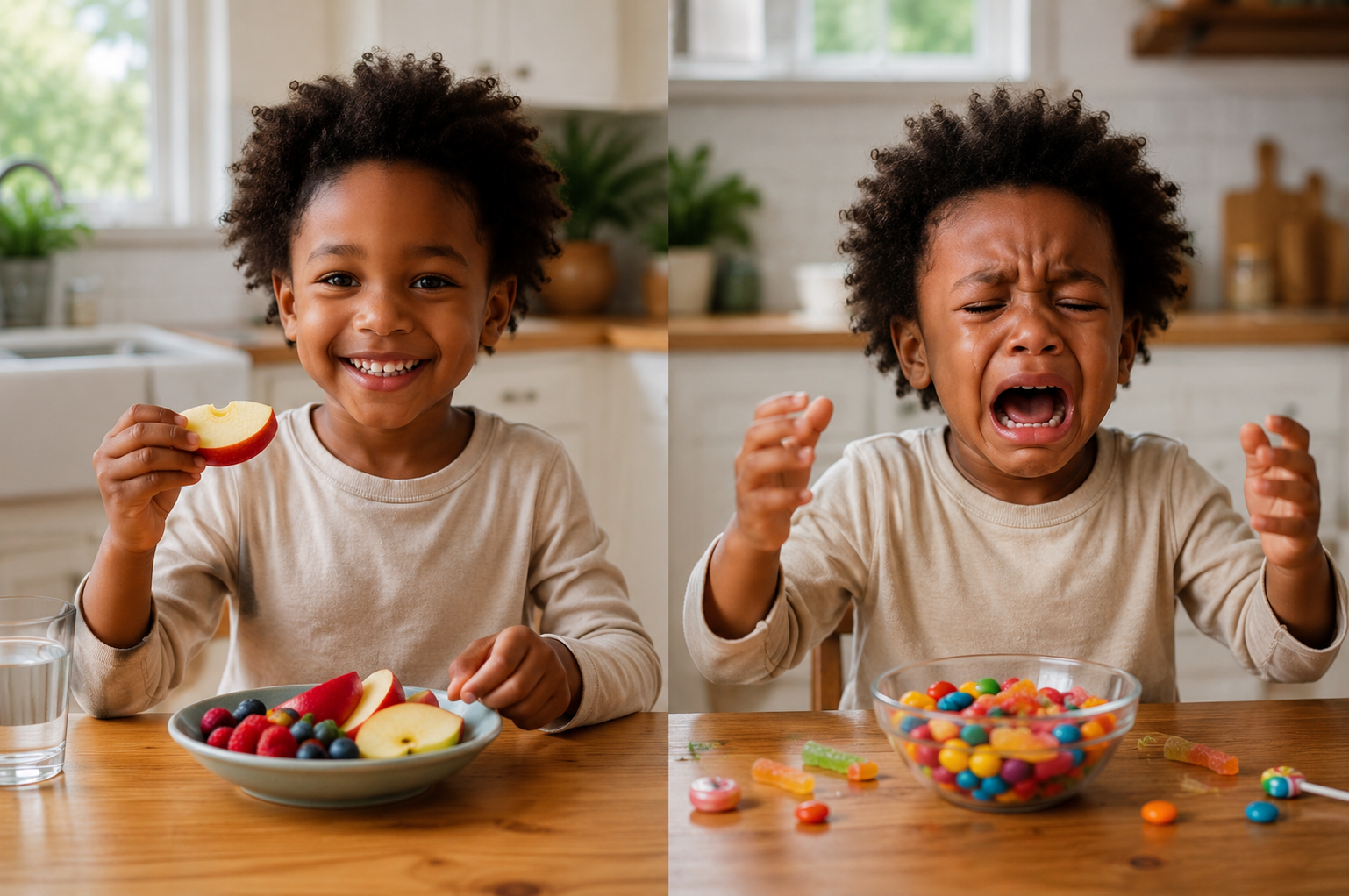
Why Your Kid Goes From Sweet to Savage After a Snack
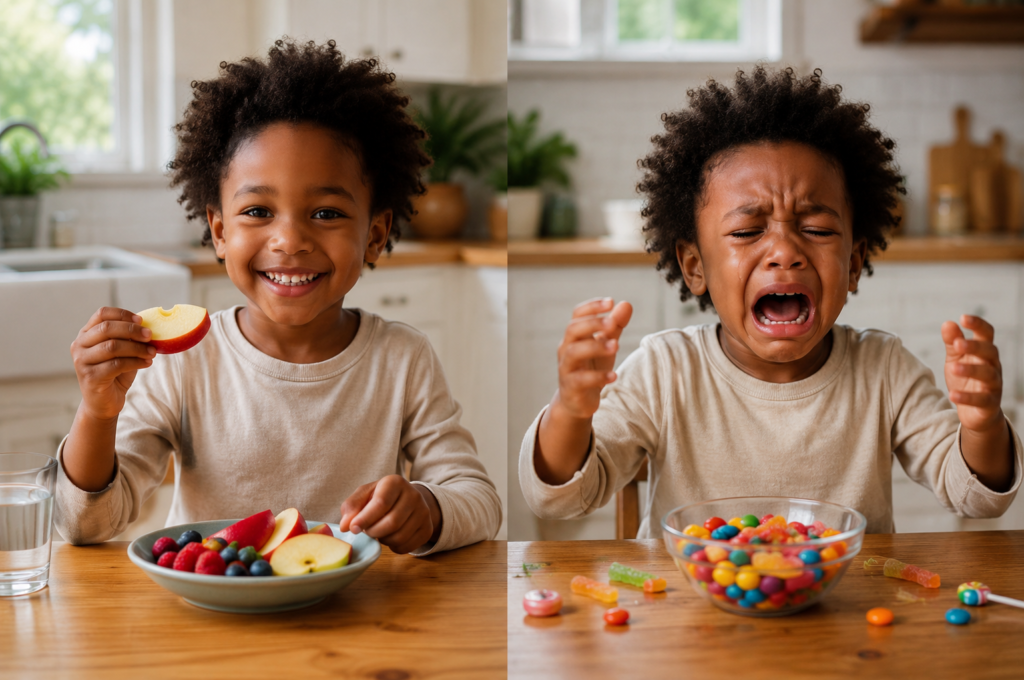
If your child goes from sweet to screaming in under an hour after a snack, you’re not imagining it. Sugar affects kids’ behavior and mood more than most parents realize — and it starts happening fast.
As a holistic nutrition graduate I want to break this down in a way that actually makes sense for real life, whether you have a toddler melting down before nap time or a school-age kid who can’t sit still after lunch.
How Sugar Affects Kids Behavior in the Body
When your child eats something high in sugar — juice, crackers, candy, even “healthy” fruit snacks — their blood sugar spikes quickly. Their little bodies respond by releasing insulin to bring that sugar back down. The problem is that in kids, this process often overshoots, causing blood sugar to drop too low too fast.
That crash is where the behavior changes happen.
You’ll see it show up as:
— Sudden moodiness or irritability
— Crying over small things
— Hyperactivity followed by a total meltdown
— Difficulty focusing or sitting still
— Tantrums that seem to come out of nowhere
This isn’t a discipline problem. This is a blood sugar problem.
Toddlers vs. School-Age Kids — Why It Hits Differently
In toddlers (ages 2-6), the blood sugar crash tends to look like big emotional meltdowns, clinginess, and difficulty self-regulating. Their nervous systems are still developing so they have very little capacity to manage those internal swings.
In school-age kids (ages 6-12), you’ll often see it show up as inability to focus, talking back, restlessness, or what gets labeled as “bad behavior” at school. Many kids who struggle with attention after lunch are actually just riding a sugar crash from what they ate earlier.
The Gut-Brain Connection Nobody Talks About
Here’s something that doesn’t get enough attention — about 90% of your child’s serotonin (the feel-good, calming neurotransmitter) is produced in the gut, not the brain. When kids eat a diet high in sugar, it disrupts the gut microbiome, which directly affects their mood, anxiety levels, and ability to regulate emotions.
This is why what your child eats isn’t just about physical health. It’s about how they feel, how they behave, and how well they can handle the normal frustrations of childhood.
5 Foods to Improve Kids Behavior After Sugar Crashes
Here are five realistic options that support steady blood sugar and won’t end up in the trash:
Apple Slices with Peanut Butter. The natural sugar in the apple is slowed down by the protein and fat in the peanut butter. No crash, no meltdown. This one is a staple for a reason.
String Cheese Easy, portable, and kids love it. The protein and fat combo keeps blood sugar stable between meals without any fuss.
Oatmeal Oatmeal is a slow-releasing carb that keeps energy steady for hours — and it works really well for kids who tolerate it. A quick note from my holistic nutrition background though — oatmeal can be mucus-forming for some children, especially those who are already congested or have sensitivities. If your child does well with it, great! If not, swap it for cream of rice or mashed banana with nut butter for the same blood sugar benefit.
Sweet Potato Fries Bake them in the oven with a little olive oil and sea salt and watch them disappear. Sweet potato has natural sweetness with fiber that slows sugar absorption — so they get the sweet without the crash.
Smoothies This is your secret weapon. Blend spinach, frozen mango, banana, and coconut milk and they will never know there’s a vegetable in there. Add a scoop of nut butter or some chia seeds for protein and fat to make it a complete blood sugar balancing snack.
Simple Swaps to Start Today
You don’t have to overhaul everything overnight. Start here:
— Swap juice for water with a slice of fruit
— Replace sugary cereal with oatmeal or cream of rice topped with berries and nut butter
— Offer cheese, apple slices, or a smoothie instead of crackers and fruit snacks
— Check ingredient labels: sugar hides under names like dextrose, maltose, corn syrup, and cane juice
Small, consistent changes add up faster than you think.
“Healthy children don’t just grow from what they eat — they grow from the habits we help them build every day.”